

[From the Archives] The Subtle Ways Travel Changes Our Habits: A Brief Reminiscence on Italy from the Perspective of a Coffee Snob
Although we may hope that travel changes us in grand ways, the smaller, subtler ways can surprisingly be more profound…and sometimes snobbish.

Greetings, fellow wanderers,
Today I am republishing another post from the archives. I want readers to know that I am diligently working to publish my upcoming book, which is scheduled to debut in early 2026. As a result, I will have a slight lull in the number of new posts until then.
Also, Those Who Wander recently hit 800 subscribers! I am sincerely grateful to everyone who has supported me. Thus, as TWW acquires fresh subscribers, I recognise that many newcomers may not have access to or be familiar with some of my initial writings. With over 120 posts in the archive, I aim to make some of these paywalled posts more accessible to a wider audience.
If you have been enjoying these ramblings on travel, adventure, and anthropology, please consider supporting my writing, which grants you full access to everything I’ve written on Substack, including excerpts from my upcoming book. In addition, the proceeds will go toward publishing and promoting my forthcoming book, ‘An Anthropology of Wandering: How Adventure Can Alleviate a Fearful Culture’. The book is a first-person account of backpacking the Appalachian Trail that dives into anthropology, travel, fear, and the meaning of adventure in culture and society. If you love social science, adventure, and travel, this book will be for you. Subscribe and stay tuned for more updates.
Can’t subscribe right now, but want to do a one-time donation? Buy me a coffee!
Thank you to everyone who has subscribed and supported my work thus far.
Cheers!
-JSB
Now onto today’s archived post, The Subtle Ways Travel Changes Our Habits: A Brief Reminiscence on Italy from the Perspective of a Coffee Snob
Travel doesn’t always change us, but sometimes it does. Sometimes it changes us in grand ways, as Mesa Verde National Park did for me. A few weeks ago, I wrote about how my travels in Colorado inspired me to become an archaeologist. And then there are small habits and behaviors we form after our travels that may not seem like much at first glance but, on closer inspection, reveal the subtle yet profound ways travel can shape our behaviors.
The French sociologist Pierre Bourdieu came up with the highfalutin academic concept of habitus, which most simply means how we all learn to perceive and engage with our social world–everything from how we walk, form accents, and develop skills to all the various ways we incorporate rituals and habits as we chart our way through life. Even something as simple as grinding roasted beans to make a cup of coffee is imbued with forms of habitus and meaning that tell a story about where you’ve been in the world. Mine is a story of how I became a coffee snob.
On my first international trip to Italy on our honeymoon years ago, I returned with a renewed love for coffee and wine. But it wasn’t just that I started to purchase and consume these products more often. I also gradually began learning about the whole cultural enterprise of sourcing, making, imbibing, and savoring these heavenly beverages. What’s more, they altered my daily habits. I had gained a greater appreciation for these wonderful products, and now I am proudly an esteemed coffee snob. I’ve even been known to travel with my espresso machine, grinder, and various roasts to ensure I never miss out on my caffeinated ritual. I still can’t claim to be a complete wine snob yet, but I do strongly favor my dry red wines thanks to touring the Tuscan countryside vineyards.
In time, the love of a simple beverage can transform our daily lives in highly ritualized and meaningful ways. With coffee, I now almost only consume nothing but pure unadulterated espresso throughout my day. Since I have the privilege of working from home, I’ve learned to strategically plan when I have another 3 oz jolt of heavenly black gold. I make one when I wake up around 7:00 a.m. before breakfast, another after breakfast, a third around 10:00 a.m., one after lunch around 1:00 p.m., and a final between 2:00-3:00.
Some might view this rigorous habit as an addiction, with me being little more than a caffeine fiend. But for me, it isn’t just the buzz of caffeine that draws me to each cup. I genuinely appreciate and savor each espresso I consume, cradling each cup in my hands while inhaling the wonderful aromas with each sip. Okay, maybe it is a bit of an addiction, but it truly enhances my day in the most profound of ways, and the act of making coffee engages all your senses.
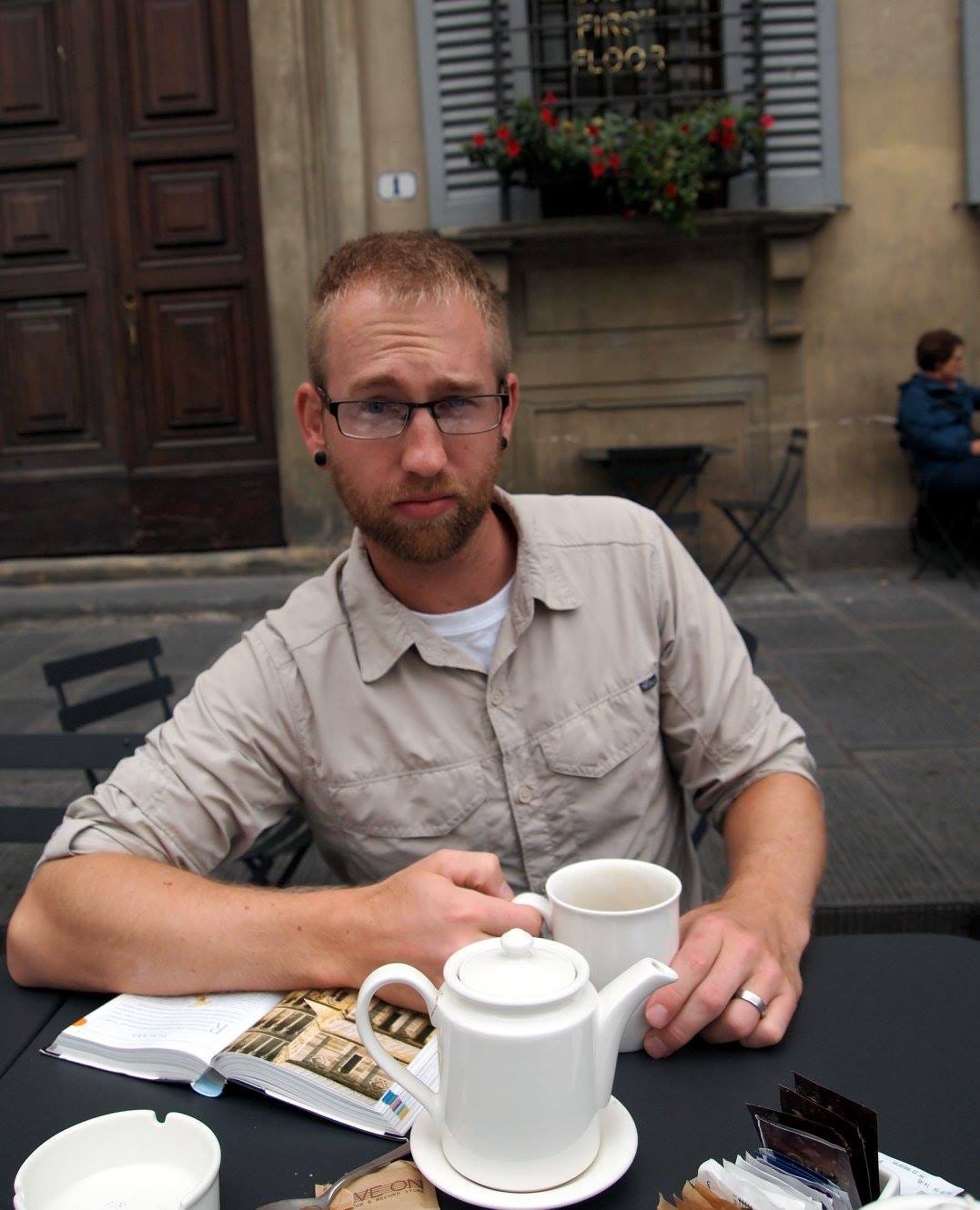
What I came to observe and admire most while in Italy all those years ago was watching people in cafes lounge for hours, deep in conversations or heads buried in a book or newspaper: In Italy, food and beverages are idolized in ways that they are not in the United States. Having a meal is a long and deliberate act there. A single meal can take four or more hours, and this intentionality has the effect of slowing you down to mindfully take in and appreciate what is right in front of you. And some aspects of this culture somehow got lodged into my head and transformed my daily habits over time.
Virtually all five senses become engaged in the process of preparing my coffee in a careful, ritualized manner: grinding the beans, tamping them into the portafilter, hitting the button, and listening and watching the double stream of fresh coffee fall smoothly into the glass where the aromas waft into the kitchen air. After some time spent sniffing around the edges of the glass and allowing things to cool, I gradually sip down the final cup, appreciating whatever unique flavors of soil and roast are contained in this week’s blend of beans.
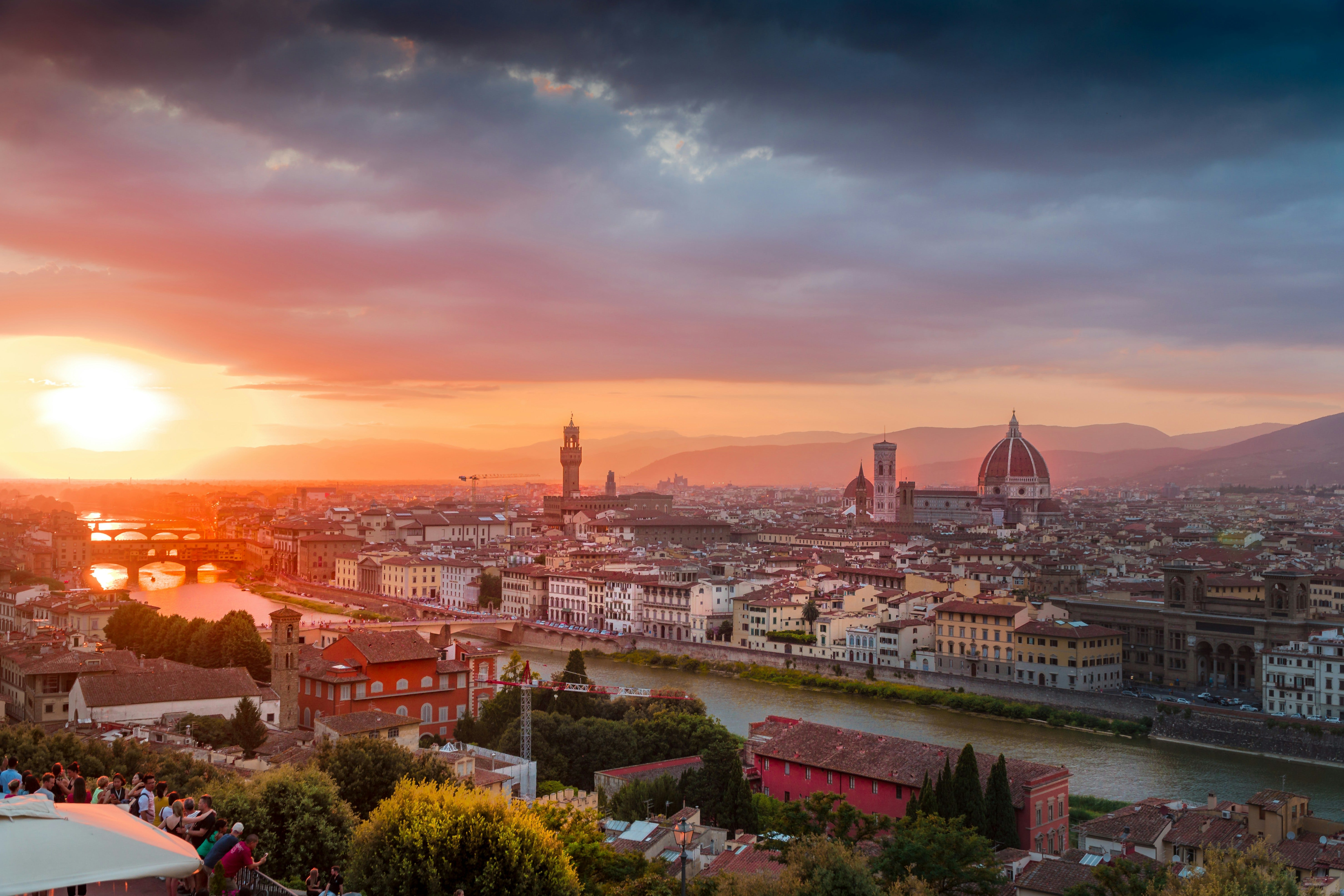
Thus, the act of inhaling the aromas and imbibing a simple cup of coffee activates something in my mind. In a sense, time travel becomes possible! All this can take me on a tour of my former travels, having me instantaneously transported and reflecting on the time I sat across from the Duomo in Florence, sampling a cup of coffee with the love of my life. To me, this is powerful–one might even say magical– how tastes and smells elicit such thoughts and memories in the brain. And now, I’ve devoted time to trying various roasts from around the world: Peru, Mexico, Costa Rica, Sumatra, Java, Ethiopia, Brazil, and Colombia. There is something wondrous and beautifully cosmopolitan in each cup of coffee, inspiring me to think of places elsewhere that I may one day wander to.
I don’t believe it is an exaggeration to say that my travels in Italy transformed my relationship with food, wine, and coffee. Despite those who are anti-travel and say travel doesn’t change us, those of us who have been changed by travel—even in the smallest of ways—know how deeply wrong they are. There are indeed many downsides to travel and tourism, the ethics and challenges I’ve previously written about here and here. However, these experiences of sipping an espresso while sitting at the heart of where the Italian Renaissance was birthed and taking a wine tour in the Tuscan countryside are testaments to how travel can alter and enhance our lives for the better.
Many critics of tourism have taken an approach that chastises all the ways we are doing things wrong when we travel, and can sometimes give many of us the impression that we need to travel less to save the planet. Maybe there is some truth in that. There is plenty to be upset about living in our modern world, and tourism can certainly wreak a lot of havoc on the planet. There are a lot of moving pieces surrounding our climate crisis, and there are many ways we all need to adapt to a changing environment. Fair enough. However, what I suspect will help change society and culture for the better is not a withdrawal from our world but one in which many more of us are more actively encouraged to become engaged in seeing the world for ourselves. Seeing things with all our senses present gives us the best insight into how things truly are “out there” in the world.
In time, we can only hope that more of us will make the appropriate behavioral changes once we’ve learned these things firsthand. One might not be up for the Nobel Peace Prize because they now appreciate good quality coffee, but for me, I’ve learned to care a lot more about a craft such as coffee because it has enabled me to also think more deeply about where the source of coffee originates around the world and how it arrives in this 3-ounce glass cup of mine. How do I do my best to make sure I am supporting all the people involved in developing this bean I now love?
One can never know ahead of time what a trip will do for a person. Some come away from their travels fully inspired to become a photographer or an architect, to join the Peace Corps or an NGO, or, in my case, become an archaeologist. Others return home ill and full of utter regret, vowing to never travel again. And a few also come back as renewed coffee snobs destined to tote around their espresso machine for the rest of their lives and vow to carry it to their graves. Nevertheless, travel is destined to change us in grand or small ways.
Culture changes best through the gradual and mutual exchange of ideas, not by authoritarian means of telling someone how they ought to live, but by granting them more opportunities to freely explore their environment. There are monumental challenges ahead of us, but let us not lose sight of the fact that “seeing the world” is imperative to all of us. Let us all learn how to nudge one another in the direction of ethical and respectful forms of travel so all of us can discover what is true and beautiful in this singular world of ours.
For consideration:
In what small ways has travel altered your daily habits for better or worse?
Thanks for being a fellow traveler with me through this read. Please consider subscribing, sharing, and supporting this project—much more to follow.
Cheers!
-JSB
Travel has certainly changed my relationships with food and wine—though not as extreme as your espresso ;) After visiting Italy for the first time in my early twenties I left with so much knowledge and renewed passion for pasta, the correct way.
5 espressos?! Now you ARE Italian!
Travel (and living in Costa Rica for 5 years) has also changed my perspective on our planet. I saw first hand the destruction of marine life from bad fishing practices and general pollution. (Since I'm originally from Chicago, that was never before a thing I noticed. Yes, seen pollution in Lake Michigan but not on the ocean). Costa Rica is also poised to be single-use plastic free by 2030, so now that I'm back in the US, I've changed my habits from what I learned there. No more plastic water bottles, reusable tote bags are my friend, and there are so many other ways to make small changes that I wouldn't have realized if I hadn't seen another country be so progressive on how they treat our planet.